How Agriweather Soil Sensor 3-in-1 Work: VWC, EC, and Temperature in Smart Farming
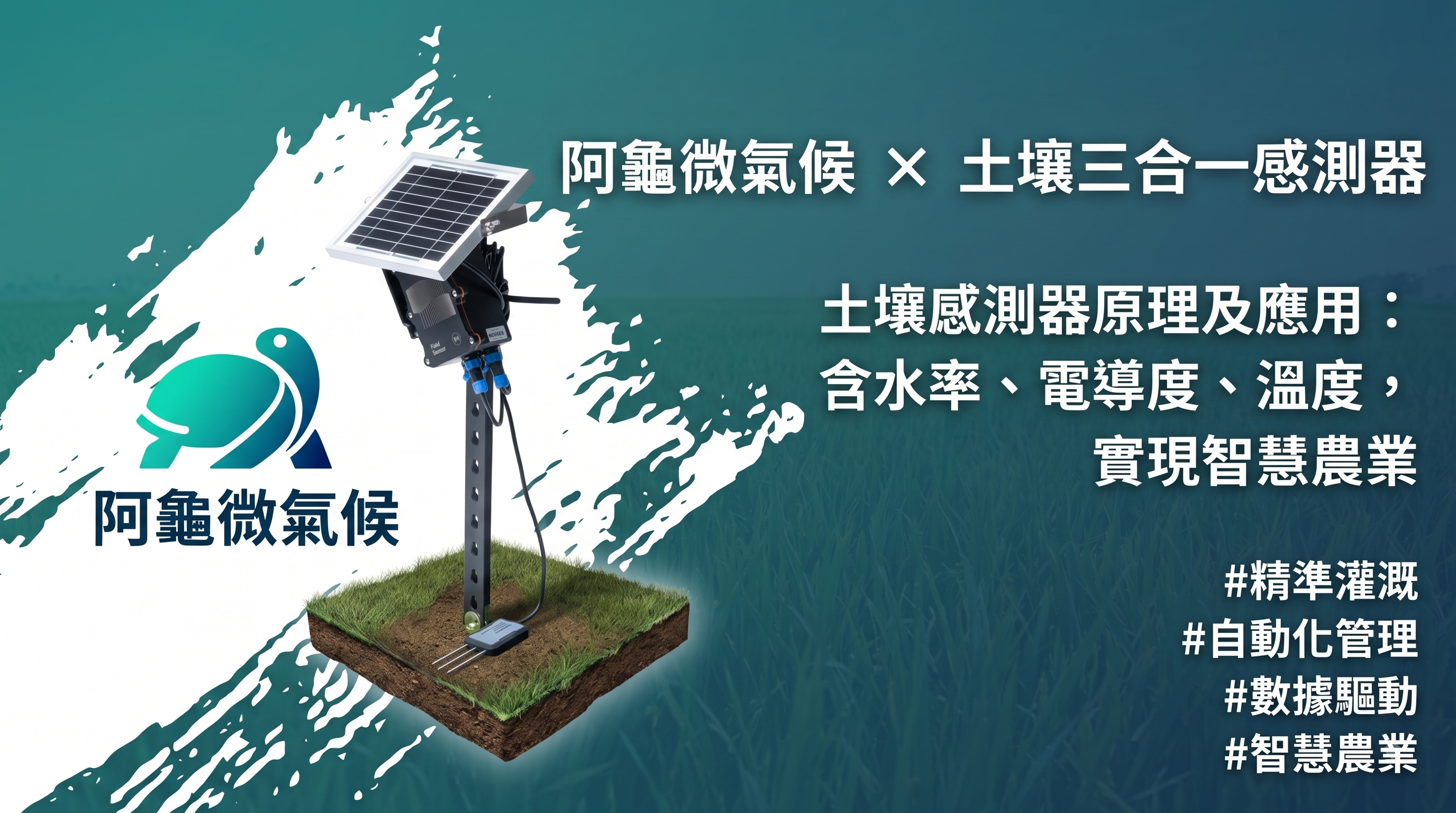 Figure: AgriWeather Soil Sensor 3-in-1
In an era marked by extreme global climate events and agricultural labor shortages, soil sensors enable precise management of crop quality and cost reduction. They have fundamentally transformed traditional farming, moving away from relying purely on intuition and luck when "touching the soil." By utilizing soil sensors, farmers can turn invisible underground conditions into real-time data, enabling true "precision irrigation" and "automated management" in smart agriculture.
I. What is a Soil Sensor?
A Soil Sensor is a tool specifically designed to monitor soil Volumetric Water Content (VWC), Electrical Conductivity (EC), and Temperature. It translates soil conditions into precise data. After data analysis, it actively offers recommendations on when farmers should irrigate and fertilize, achieving precision irrigation, reducing fertilizer waste, and enhancing crop yield as well as economic value. Below is a detailed explanation of soil water content, soil electrical conductivity, and soil temperature.
1. Soil Sensor Monitoring: Soil Volumetric Water Content (VWC)
Soil water content refers to the amount of water contained within soil pores. Soil sensors provide real-time monitoring of soil moisture conditions, giving farmers a reliable basis for deciding whether or not to irrigate, thus avoiding overly high or low moisture levels that could impair crop growth.
In the past, without the aid of soil sensors, farmers could only estimate moisture by digging with fingers, visual inspection, measuring soil weight, or observing plant behavior. This empirical approach lacked quantitative evidence, introducing uncertainty into crop growth. Today, scientific soil sensors eliminate errors from manual judgment, offering precise control over soil moisture content.
AgriWeather's Soil Sensor 3-in-1 monitors the "Volumetric Water Content" (VWC) in the soil—a high reading indicates sufficient moisture, while a low reading points to dry conditions. When moisture levels drop below the optimal range for a specific crop, it is time to irrigate.
After gathering moisture data, AgriWeather determines the recommended soil moisture range based on soil texture characteristics (such as sandy soil or clay soil) and provides tailored irrigation advice on the "Device-Turtle" system. This unique system prevents farmers from facing the common dilemma of having monitoring numbers without knowing how to act on them.
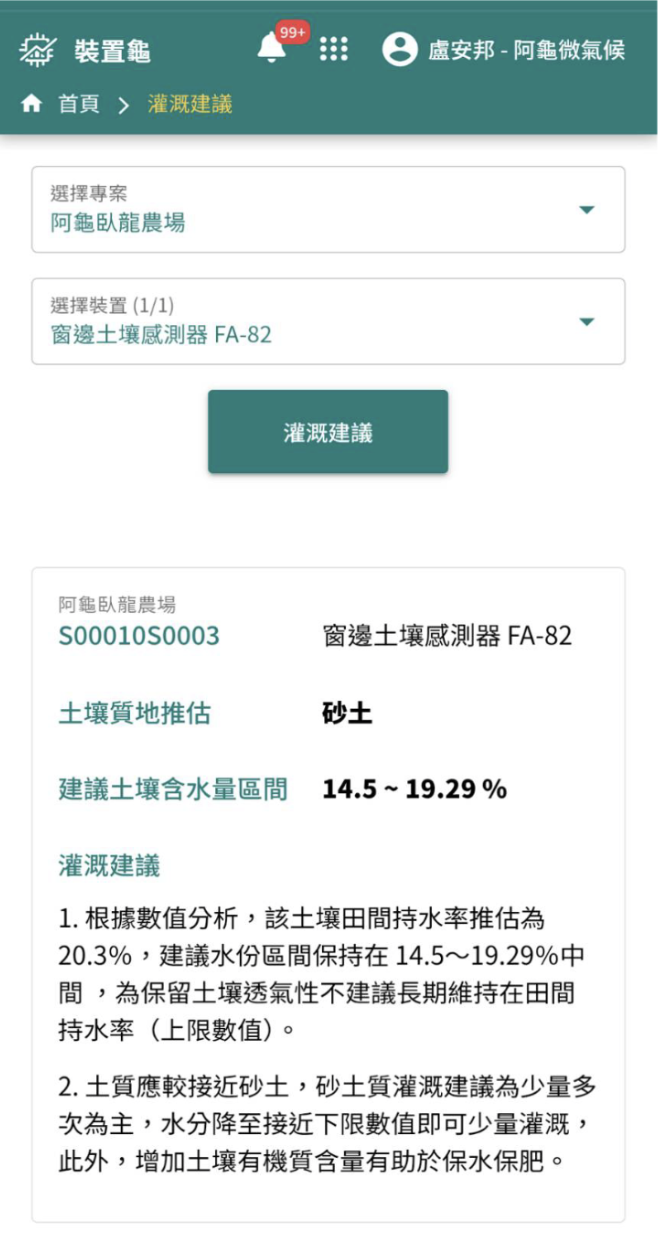
Figure: AgriWeather Device-Turtle System — Soil Moisture Irrigation Recommendations
Further Reading: Brother Yu's Wentan Pomelo Orchard utilized the AgriWeather system to achieve precision irrigation, increasing pomelo yield by 20% while saving 97.5% of irrigation water.
2. Soil Sensor Monitoring: Soil Electrical Conductivity (EC)
Soil Electrical Conductivity (EC) reflects the concentration of soluble salts in the soil. It serves as an indicator for measuring soluble ion concentrations in liquid fertilizers or growing media. A higher EC reading signifies a higher fertilizer content in the soil.
However, more fertilizer in the soil is not always better. Moderate fertilization allows crops to absorb nutrients efficiently without pest/disease interference, thereby increasing yield. But when fertilizer nutrients exceed what crops can absorb, soil salinization begins to occur. This hampers the crops' ability to take up water and nutrients, destabilizes soil microbial ecosystems, and leaves crops more vulnerable to diseases.
AgriWeather's Soil Sensor 3-in-1 not only detects soil EC levels, but its "Device-Turtle" system also calculates the optimal soil EC for specific crops. By actively providing actionable advice, it helps farmers keep soil fertility within a safe, nutrient-rich range, preventing fertilizer burn or nutrient deficiencies.
3. Soil Sensor Monitoring: Soil Temperature
Extremely high or low soil temperatures negatively affect crop growth, particularly during the germination stage. Root absorption of water and nutrients also varies based on soil temperature.
Therefore, monitoring temperatures at different soil depths is crucial for reminding farmers to adjust environmental controls in a timely manner, as well as managing cold snap warnings and heatwave mitigation.
II. Soil Sensor Principles
1. Capacitive Sensors (FDR)
- Principle: Uses soil as a dielectric material to measure changes in capacitance and deduce water content.
- Advantages: Stable, durable, and resistant to corrosion/rusting.
- Suitable Environment: Suitable for most agricultural conditions.
2. Tensiometers
- Principle: Simulates the suction/tension plant roots must exert to extract water from the soil.
- Advantages:
- Intuitive: Directly reflects how hard it is for plants to draw water.
- Accurate: Unaffected by soil texture (sand vs. clay)
3. Resistive Sensors
- Principle: Uses two metal prongs to measure soil moisture based on water conductivity.
- Advantages: Lower cost.
- Suitable Environment: Home potted plants; not recommended for commercial agricultural production.
4. Time-Domain Reflectometry (TDR)
- Principle: Emits electromagnetic waves and measures their reflection time.
- Advantages: Highest accuracy, unaffected by salinity.
- Suitable Environment: Expensive; typically used in laboratories or large-scale research projects.
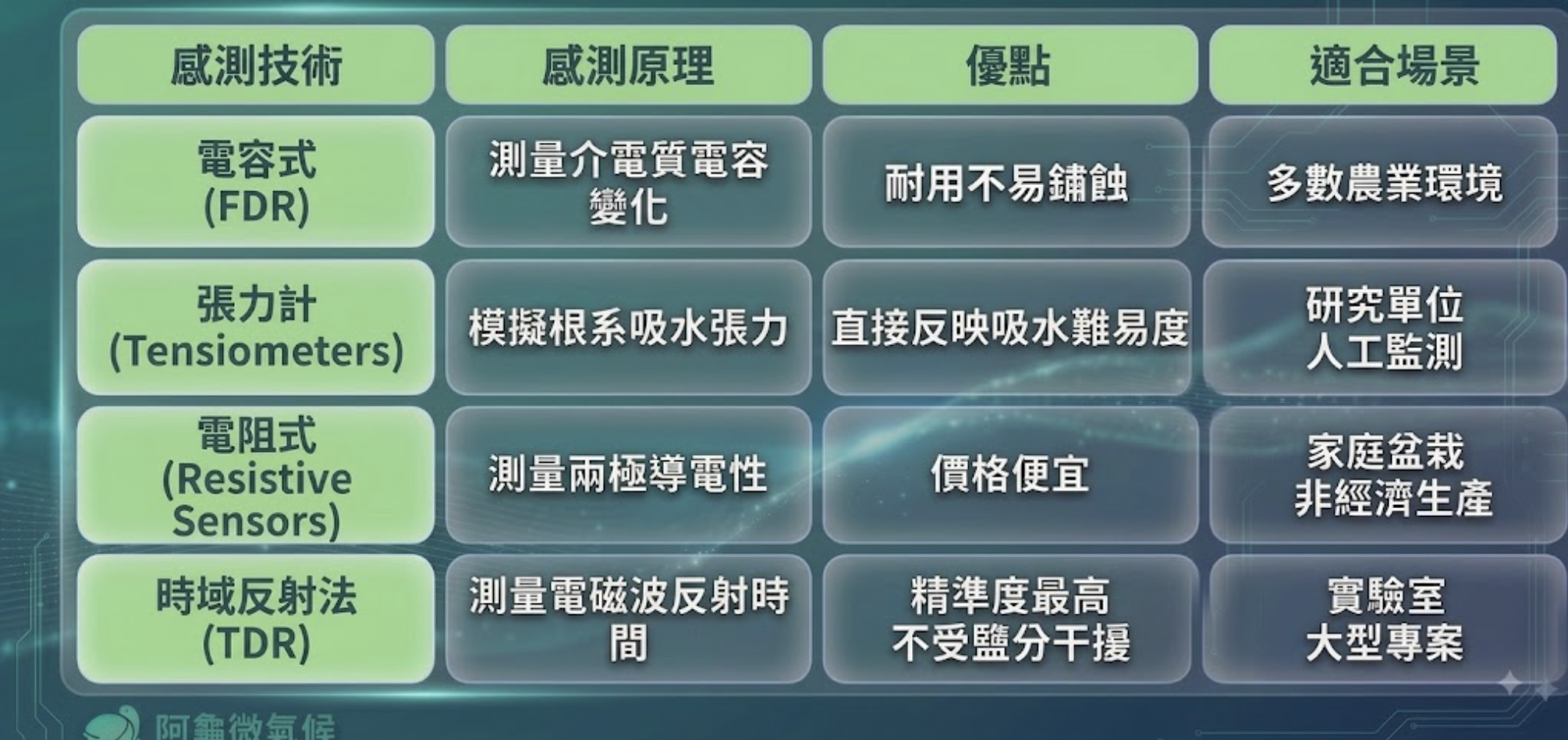
Figure: Comparison Table of Soil Sensor Principles
The AgriWeather 3-in-1 Soil Sensor utilizes more than one monitoring technology. It employs capacitive sensing technology for monitoring moisture content due to the following two reasons:
- Enhanced Durability: Since the sensor requires long-term contact with soil and water, the capacitive sensing area is completely encased in an insulating layer. This eliminates corrosion issues and prevents damage to the equipment when buried underground.
- Data Accuracy: Capacitive sensing detects moisture based on a physical property (dielectric constant) specifically sensitive to water. It reacts exclusively to pure water content, remaining completely unaffected by fertilizers or salts.
For measuring soil temperature, a resistive sensor is used instead. The electrical resistance changes in response to temperature fluctuations, delivering high accuracy and exceptional stability.
III. Types of Soil Sensors
Soil sensors are categorized into portable and fixed types depending on the application scenario:
- Portable: Lightweight and compact for easy transport.
- Single-Point Buried: Fixed at a specific depth in the field to collect long-term data for continuous soil environment monitoring.
- Profile / Tube Sensors: Measures moisture across multiple depths simultaneously (e.g., 10 cm, 30 cm, and 60 cm).
AgriWeather's 3-in-1 Soil Sensor is a Single-Point Buried Sensor. During installation, it is placed horizontally in the soil at the depth where root water and fertilizer absorption are most active for the specific crop, ensuring the data gathered is highly representative.
IV. AgriWeather 3-in-1 Soil Sensor: Complete Solution for Smart Agriculture
AgriWeather's sensor simultaneously monitors soil Volumetric Water Content (VWC), Electrical Conductivity (EC), and Temperature. Designed to withstand harsh outdoor conditions, it overcomes climate and power supply challenges through key advantages:
- Outdoor-Grade Durability: Withstands high temperatures above 40°C, featuring weather-resistant and waterproof designs.
- Low Power Consumption & High Efficiency: Designed for long-term outdoor deployment with optimized energy management.
- Reliable Wireless Communication: Enables stable long-distance data transmission across field conditions.
- Intelligent Platform Integration: Seamlessly syncs field data with the "Device-Turtle" software platform to generate automated irrigation and fertilization insights.
- Turnkey Deployment: Fast installation tailored to field conditions and crop root depth.
V. How to Choose a Soil Sensor?
When selecting a soil sensor for smart agriculture implementation, consider the following key factors:
1. Product Pricing
Low-cost sensors typically consist of basic sensing components only, lacking the ability to calibrate data. Consequently, their readings are less accurate and prone to distortion across different soil properties and usage scenarios. Furthermore, these devices generally have poor weather resistance and are easily damaged by environmental factors such as moisture, wind, and high temperatures.
Data must be checked on-site or transmitted via short-range Bluetooth, making remote monitoring impossible. Additionally, without a continuous power supply, they cannot perform long-term, uninterrupted data monitoring.
Applicable Environments: Indoor planting or small-scale personal gardening.
Medium-priced sensors belong to professional-grade soil sensing systems. In addition to the sensing components, they include power supply units, transmission systems, and data analytics tools. Taking the AgriWeather 3-in-1 Soil Sensor as an example, it combines a 3-in-1 soil sensor with a solar-and-battery power system to continuously monitor soil metrics over extended periods. The transmission system uploads real-time data to the cloud, where powerful software conducts thorough data analysis and processing.
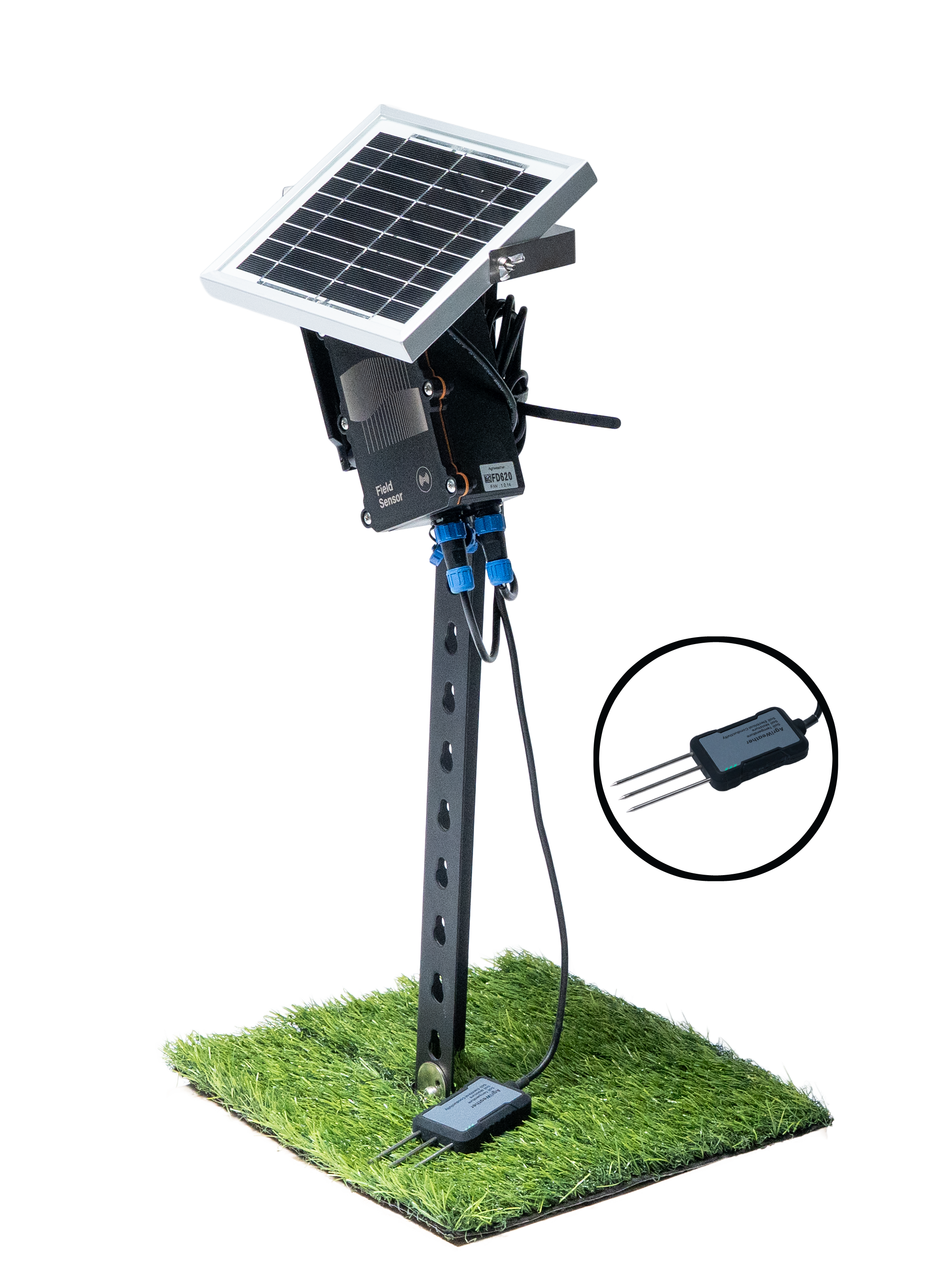
Figure: AgriWeather Soil Sensor 3-in-1
Higher-priced sensors are mostly used by research institutions to provide laboratory-grade accuracy—for instance, the Time-Domain Reflectometry (TDR) technology mentioned earlier belongs to this high-end category. However, their monitoring methods differ from those used in standard open-field cultivation, making them less suitable for general agricultural production.
2. Communication Stability
Having a stable signal in the field is crucial to avoid underperformance caused by network instability, which could leave equipment abandoned as "field orphans."
AgriWeather uses LoRa or 4G transmission to balance efficiency and cost, tailoring options to different field scenarios. Although Wi-Fi and Bluetooth are lower in cost, their transmission stability is easily affected by distance and environmental factors, making them less suitable for open-field outdoor use.
3. Service Integration
In addition to soil monitoring equipment, it is recommended that farmers choose a system that provides professional "data analytics" and "automation" services.
- Data Analytics: Avoid the dilemma of having data without knowing how to use it or misinterpreting it. Once the sensor receives the data, the system analyzes and transforms it into clear, precise actionable recommendations for irrigation, fertilization, and pest/disease prevention.
- Automation: When integrated with real-time data, a system offering automated irrigation services unleashes the full potential of smart agriculture. It saves farmers from constantly commuting between home and field, allowing them to manage field conditions effortlessly.
Unlike manufacturers that only supply hardware, AgriWeather goes a step further by using system big data analytics to decode the collected information. It provides farmers with the most intuitive, scientific farming recommendations for irrigation, fertilization, pest prevention, and future crop management decisions.
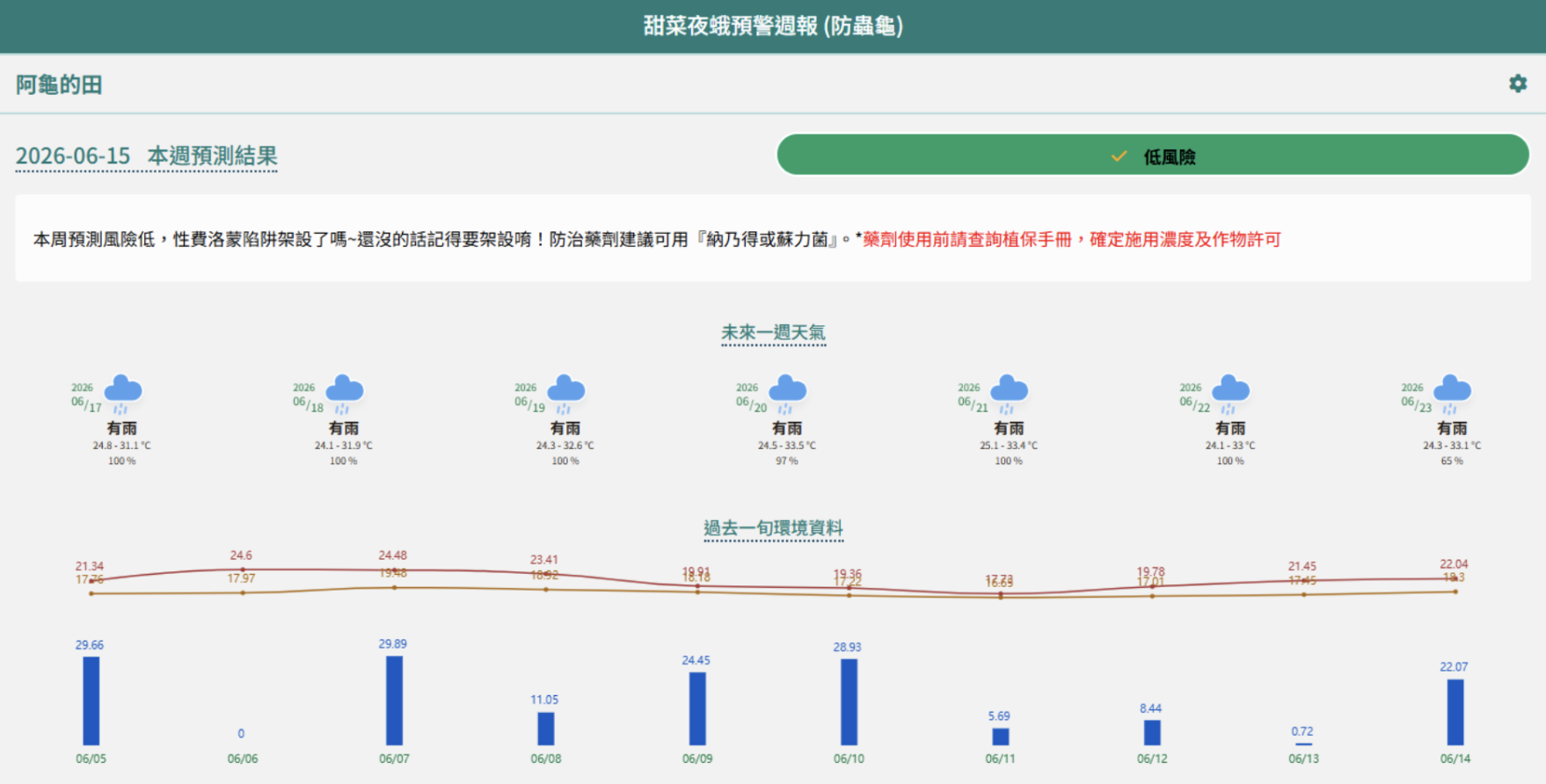
Figure: Beet Armyworm Warning System, capable of providing alerts up to 10 days in advance along with control recommendations.
4. Maintenance and After-Sales Support
Choose a brand that offers technical support to ensure that when equipment breaks down, someone is there to repair it, and when data is confusing, someone is there to guide you. AgriWeather products come with a dedicated LINE group where specialists answer questions and help farmers troubleshoot issues. If equipment malfunctions, it can be shipped directly back for inspection and repair.
Soil Sensors 3-in-1 (FAQ)
Q1:Does the AgriWeather Soil Sensor 3-in-1 come with a warranty? How is it repaired?
A1:Using the AgriWeather Soil Sensor 3-in-1 comes with a one-year warranty. Furthermore, whether within the warranty period or not, mail-in repair service is supported if the equipment encounters any issues, ensuring your hardware is never left unsupported.
Q2:How does the EC value measured by the AgriWeather Soil Sensor 3-in-1 differ from that of the District Agricultural Research and Extension Station (DARES)?
A2:District Agricultural Research and Extension Stations (DARES) use a 1:5 soil-to-water dilution method. In a laboratory setting, salts are extracted using water five times the volume of the soil, followed by filtering out sand and air to measure only the salt concentration in the liquid.
In contrast, the AgriWeather Soil Sensor 3-in-1 measures the overall electrical conductivity of the combined matrix of soil, water, and air. Because both soil and air are poor conductors, the monitored readings will be lower than the results obtained from DARES.
Since the two methods rely on different measurement baselines, the latter is better suited as a trend indicator for continuous farm management.