Smart Agriculture Implementation in Nan-ao: Successfully Evading 5 Typhoons with a 95% Emergence Rate and Generating Over NT$18 Million in Benefits.

Typhoons are no longer a matter of fate, but a manageable rhythm in the agricultural calendar through proactive planning.


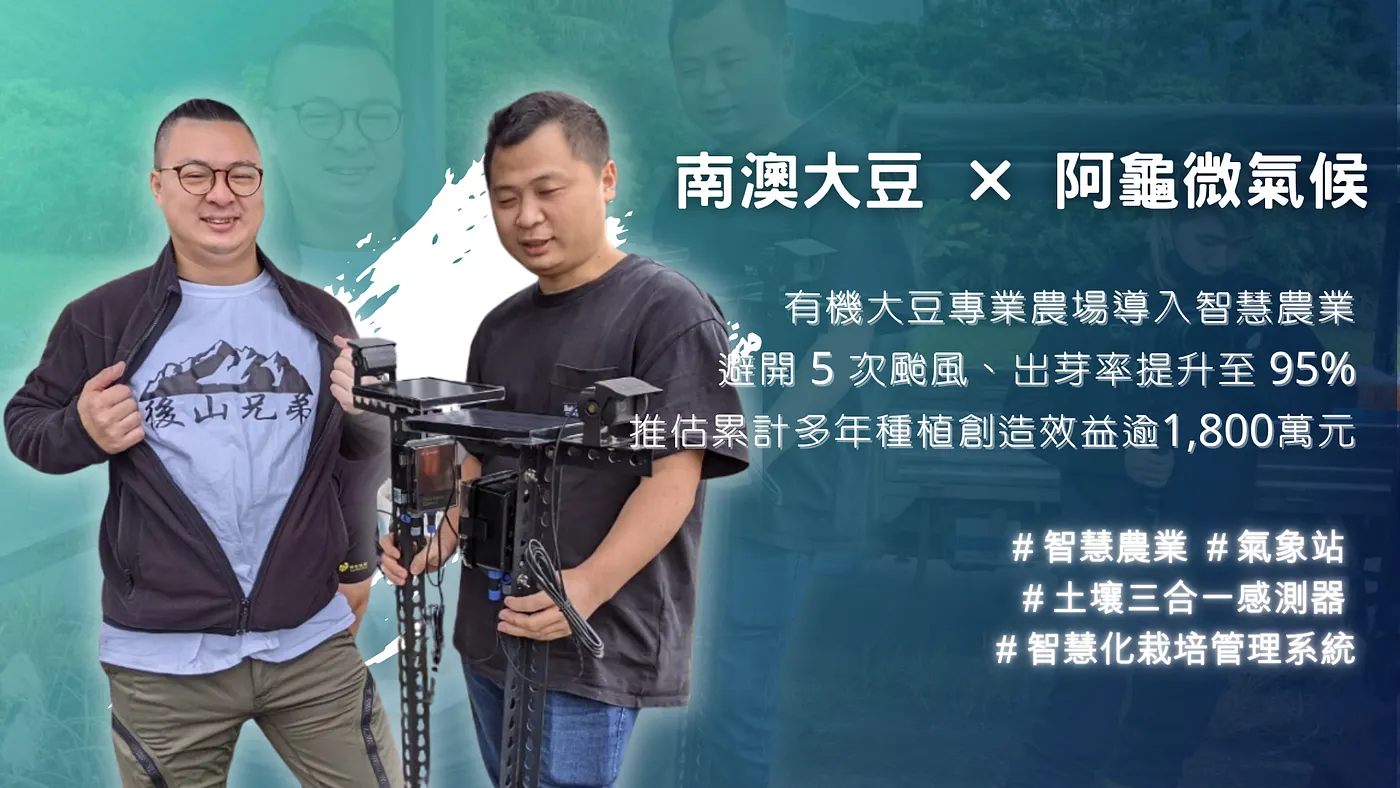
Photo shows Huang Po-kai and Huang Sung-yu of Nan-ao's Wei-yun Organic Farm with AgriWeather sensors.Photo shows Huang Po-kai and Huang Sung-yu of Nan-ao's Wei-yun Organic Farm with AgriWeather sensors.

Smart Farming Methods Learned from Canada

Wei-yun Organic Farm is a specialized organic soybean farm located in Nan-ao, I-lan, co-operated by Huang Po-kai, a recipient of the 5th Top 100 Young Farmers award, and his younger brother, Huang Sung-yu. During a working holiday at a blueberry farm in Canada, the brothers observed how the local farm utilized sensors, agricultural machinery, and data management to enhance efficiency. This inspired them to introduce modernized management methods upon returning to Taiwan, focusing specifically on soybean cultivation.

For more interesting stories about organic soybean cultivation, please click the links in the "Further Reading" section below 🔗
Or visit the 👉 Wei-yun Organic Farm Facebook page to learn more!


・・・


What are the difficulties of growing soybeans in Nan-ao?

  1. High Climate Risk: Taiwan experiences an average of 3 to 4 typhoons annually. Typhoons during the flowering or harvest seasons often cause pod dropping, molding, or even the death of entire plants, severely affecting yield and quality while increasing the pressure on farmers for recultivation.
  2. Severe Typhoon Impact: According to disaster statistics from several typhoons in 2024, soybeans are frequently among the hardest-hit crops. For instance, Typhoons Usagi, Koinu, and Krathon caused the loss of dozens of hectares of soybeans, reflecting the crop's high vulnerability to climate risks.
  3. Inaccurate Weather Data: Official weather stations are mostly located in high mountain areas, resulting in a significant discrepancy between actual forecasts and real-time field weather. This makes it difficult for farmers to make immediate adjustments based on weather changes, thereby increasing management risks.
  4. Reliance on Manual Experience: Planting and management relied heavily on manual labor and experience, making it challenging to precisely grasp the optimal timing for farm operations. When sudden weather changes occurred, farmers were often unable to react in time.
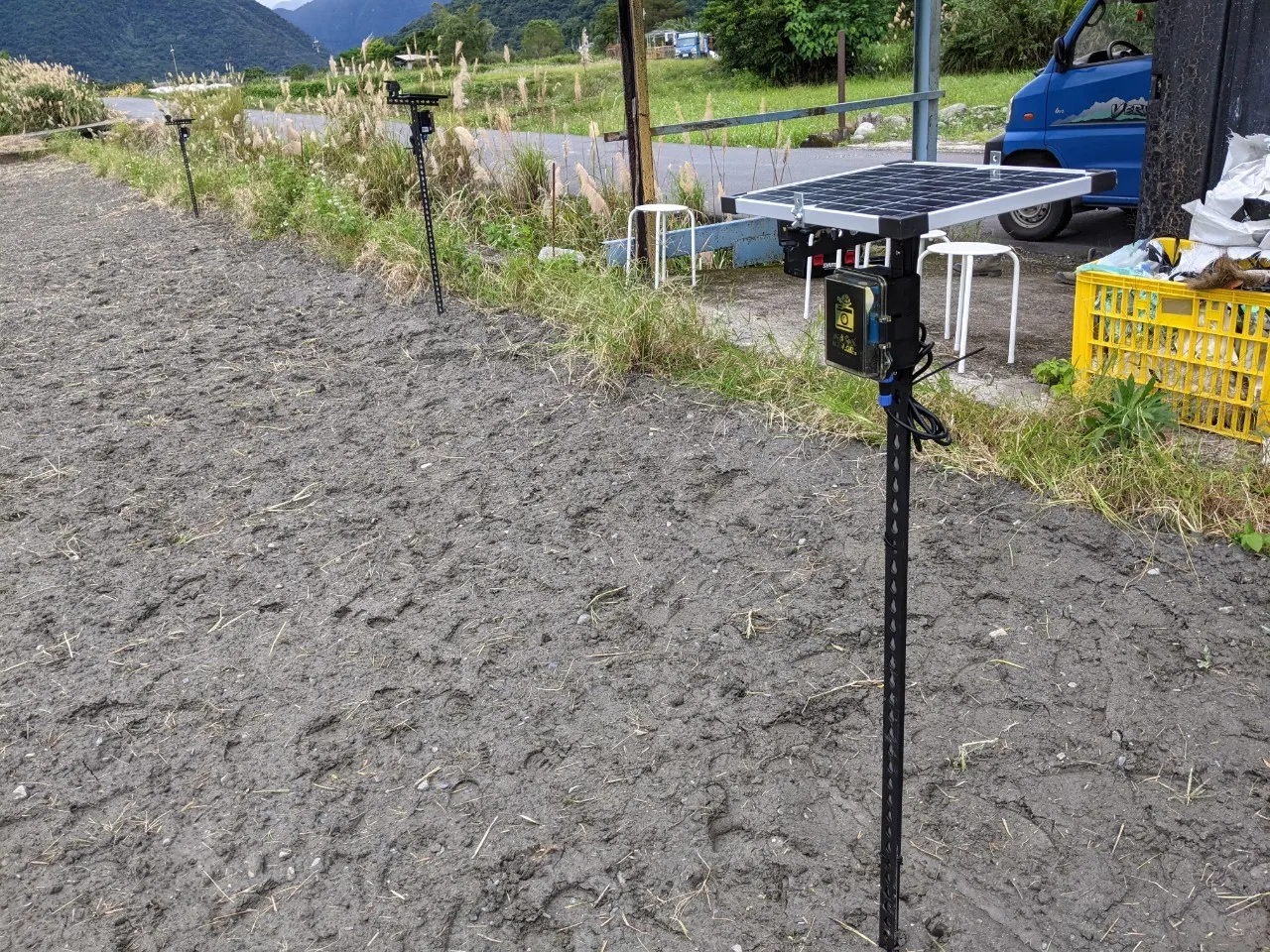
Under the guidance of the Hualien District Agricultural Research and Extension Station, the brothers integrated a smart management system built by AgriWeather, which includes Weather Stations and Soil Sensor 3-in-1s. This implementation ensured that growing soybeans would no longer be entirely at the mercy of the weather.


・・・


What solutions and smart tools were introduced?

  1. Weather Station
    • Stations from the Central Weather Administration are mostly located at high altitudes, which creates a gap between forecasts and actual field conditions. By establishing dedicated Weather Stations on-site, information such as temperature, humidity, rainfall, and wind speed is updated every 10 minutes, providing real-time data that is much closer to actual field conditions than official forecasts.
  2. Soil Sensor 3-in-1
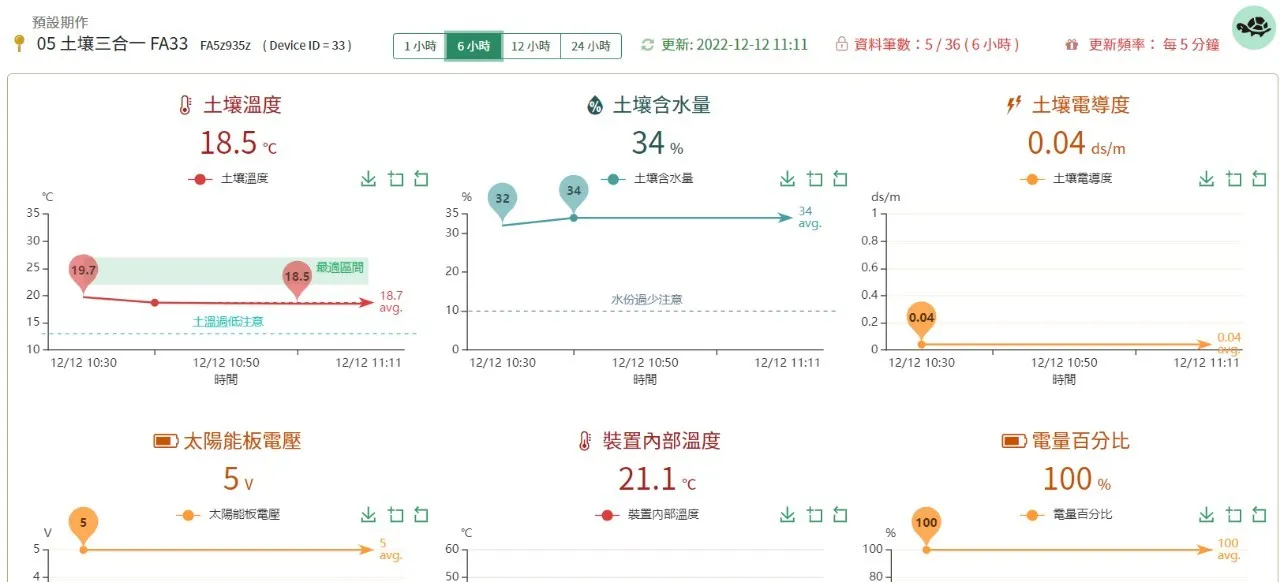
    • These sensors detect soil temperature, moisture content, and electrical conductivity (EC), which are used for sowing decisions and nutrient management. They can be deployed in the fields for extended periods, providing stable and high-frequency soil data to improve the immediacy and precision of agricultural decision-making.
  3. Smart Cultivation Management System
    • AgriWeather assisted the Hualien Agricultural Research and Extension Station in developing the "Smart Soybean Cultivation Management System." This system integrates soybean growth period prediction models, stress models, and weather forecasts. Since Wei-yun manages a large farming area with scattered fields, the timing for sowing, fertilizing, and harvesting varies. This system helps aggregate information and unify management, keeping the entire process organized.


    ・・・


    Three Major Benefits After Implementation

    1. Successfully avoided 5 typhoons, saving an estimated NT$17.5 million in losses.
      • By analyzing historical meteorological data, Wei-yun was able to adjust flowering and harvest periods to avoid five major typhoons.
      • Planting area per phase: approx. 35 hectares × 5 times = 175 hectares.
      • Yield per hectare: 1 metric ton × Profit: NT$100/kg. The revenue per hectare is NT$100,000, resulting in an estimated total avoided loss of approximately NT$17.5 million.
    2. Emergence rate increased from 70% to 95%, gaining an extra NT$8.75 million over 5 years.
      • Traditional visual-estimation sowing resulted in an emergence rate of only about 70%. After introducing soil sensors, sowing is executed only when soil moisture meets the standard, stabilizing the emergence rate at 95%.
      • Over 5 years, a total of 10 crop phases were planted, accumulating a total farming area of 350 hectares.
      • The 25% increase in emergence rate is equivalent to an additional NT$875,000 in revenue per phase, accumulating to over NT$8.75 million in 5 years.
        • Calculation:
        • 35 hectares × NT$100,000 per hectare × 25% = NT$875,000 extra per phase.
        • NT$875,000 × 10 phases (5 years) = NT$8.75 million total extra revenue.
    3. Cold damage warning + Pre-typhoon early harvest, saving an estimated minimum of NT$350,000 in losses.
      • In the first phase of 2021, sowing was originally scheduled for January. However, the model predicted a survival rate of less than 50%. Sowing was postponed to February, successfully avoiding cold damage.
      • In the second phase, due to early warnings, crops were harvested ahead of schedule, successfully avoiding heavy typhoon rains and safeguarding NT$350,000 in initial investment costs (such as seeds, land preparation, fertilizers, etc.).
    For farmers, technology often arrives too quickly and seems too difficult to understand; for us, agriculture is always more complex than systems. However, from the soybean fields of Nan-ao, we learned to adjust our pace, slow down, and truly listen to the real needs. Behind every piece of data lies the choices and attempts of the two brothers, and behind every avoided disaster, there is a team silently keeping watch in the background. This collaboration is not just about digital benefits, but the accumulation of mutual trust and understanding.


    ・・・


    🙋 Frequently Asked Questions (FAQ)

    Q1: Do farmers need to operate this system themselves?
    A1: No. The data is updated automatically, and the management platform will proactively send alerts for key weather changes and agricultural recommendations. AgriWeather will also assist with the setup and data interpretation.
    Q2: In addition to soybeans, are these sensors suitable for other crops?
    A2: Yes. They are especially suitable for crops that react quickly to climate and soil conditions and require precise field management, such as corn, tomatoes, pomelos, and tea. The system can also be extended to diverse agricultural scenarios, including cabbage, pineapples, and greenhouse vegetables.
    Q3: What are the characteristics of the soybean crop itself?
    A3: Soybeans are short-term crops that are highly sensitive to variations in moisture and temperature. In particular, the flowering and harvesting stages are especially vulnerable to rainfall and low temperatures, and root development is closely linked to soil moisture content. Therefore, it is highly suitable for precise management using smart sensing systems.
    Q4: How should the equipment be installed? What should I do if the equipment malfunctions?
    A4: AgriWeather's products have undergone multiple generations of improvement, making the installation process quite simple. We provide a complete installation manual and online guidance services; at the same time, we can also arrange for a specialist to assist with on-site installation to ensure the equipment operates smoothly. If any equipment anomalies occur later on, we will first provide online technical support for troubleshooting. If the issue still cannot be resolved, please ship it back to AgriWeather, and we will help identify the cause for you.
    Q5: Can the Smart Cultivation Management System be customized?
    A5: Yes. AgriWeather's Smart Cultivation Management System can be adjusted based on different regions, crops, and management needs to create the field management tool that best fits your requirements.


    ・・・


    Further Reading / Collaboration Opportunities